Deprecated: Methods with the same name as their class will not be constructors in a future version of PHP; Blogger_Importer has a deprecated constructor in /home/wsms/vipproperty.com/public_html/wp-content/plugins/blogger-importer/blogger-importer.php on line 44

Warning: Cannot modify header information - headers already sent by (output started at /home/wsms/vipproperty.com/public_html/wp-content/plugins/blogger-importer/blogger-importer.php:44) in /home/wsms/vipproperty.com/public_html/wp-includes/feed-rss2.php on line 8
Architecture – VIP PROPERTY https://v.wsms.me Best Property Deals Sat, 31 Oct 2020 10:12:48 +0000 en-US hourly 1 https://wordpress.org/?v=5.5.20 ‘CHOICE ARCHITECTURE’ AND VIP PROPERTY https://v.wsms.me/choice-architecture-and-vip-property/ https://v.wsms.me/choice-architecture-and-vip-property/#respond Thu, 16 Jul 2020 08:45:30 +0000 https://vipproperty.com/?p=18867 Choice architecture and VIP Property

The post ‘CHOICE ARCHITECTURE’ AND VIP PROPERTY appeared first on VIP PROPERTY.

]]>

The term of ‘choice architecture’ is originated from Thaler & Sunstein’s very interesting book Nudge (Penguin Books, London, 2009). In their own words “a choice architect has the responsibility for organizing the context in which people make decisions” (p.3) As it can be easily predicted there are several parallels between choice architecture and more traditional forms of architecture: “A crucial parallel is that there is no such thing as a ‘neutral’ design.” (p.3) Let me quote an important statement on structure complex choices: “People adopt different strategies for making choices depending on the size and complexity of the available options. When we face a small number of well-understood alternatives, we tend to examine all the attributes of all the alternatives and then make trade-offs when necessary. But when the choices set gets large, we must use alternative strategies and these can get us into trouble.” (p.103) Another quotation on ‘diversification’: “Don’t put all your eggs in one basket. In general, diversification is a great idea, but there is a big difference between sensible diversification and the naïve kind. A special case of this rule of thumb is what might be called the ‘r/n’ heuristic: ‘When faced with “n” options, divide assets evenly across the options. Put the same number of eggs in each basket.” (p.134)

Now, the reasons I have referred to this ‘sui generis’ (to certain degree) book and quoted some sections is to show that there are very interesting parallels between the main arguments forwarded throughout the book and the way we, as VIP Property, operate. We deal with the international clients who are kind of lost in numerous options. Even they do not confess, they are puzzled and ‘disoriented’. Our role is to help the clients, first of all, understand themselves. This statement might sound a bit weird, but truthfully speaking in practice this is the case. When the clients stat searching options in Istanbul market (wither for investment or personal use), they are not very much aware of the right questions or the necessary questions that need to be asked. Our role is to put forward these questions that the clients never asked themselves before. In that sense, our responsibility is “to organize the context”.

In the book, there is a good example on ‘structure complex choices’. Imagine Jane has been offered a job at a company located in a large city far from where she lives. She is facing two choices: which office to select and which apartment to rent. Suppose that Jane is offered a choice of three available offices in her workplace. A reasonable strategy for her to follow would be to look at all three offices, note the ways they differ, and then make some decisions about the importance of such attributes as size, neighbors, and distance to the nearest rest room. In the choice literature it is described as a ‘compensatory’ strategy, since a high value for one attribute (big office) can compensate for a low value for another (loud neighbors). No doubt, the same strategy cannot be used to pick an apartment. One strategy to use is what Amos Tversky (‘Elimination by Aspects: A Theory of Choice’, Psychological Review 76 (1972): 31-48) called ‘elimination by aspects’. Someone using this strategy first decides what aspect is most important (for instance, commuting distance), establishes a cutoff level (for instance, no more than a thirty-minute commute), then eliminates all alternatives that do not come up to this standard. The process is repeated, attribute by attribute (no more than $1,500 per month; at least two bedrooms; dogs permitted), until either a choice is made or the set is narrowed down enough to switch over to a compensatory evaluation of the ‘finalists’. When people are using a simplifying strategy of this kind, alternatives that do not meet the minimum cutoff scores may be eliminated even if they are fabulous on all other dimensions. So, for example, an apartment that is a thirty-minute commute will not be considered even if it has a dynamic view and costs two hundred dollars a month less than any of the alternatives. This is exactly the way we work: we figure out the attributes for the clients and then develop a strategy to eliminate till reach the ‘right’ option.

We also work on the balance between the incentives and the price. We put the right incentives to the right client by asking the right the questions. What are the ‘best’ options (surely by analyzing what the best is and why, what makes this option ‘best’), in long-term what the benefits are, how we can avoid short-term tricky and not genuine so-called ‘benefits’, and so on.

We also work on the diversification in favour of the clients. We encourage the clients to diversify their investments, i.e. ‘put the same number of eggs in each basket’.

Final point: when we are working on the options, we know which options could lead to which consequences from practice by not only applying the ‘rule of thumb’, but also by analyzing each case in depth.

Evren Erem, VIP Property

The post ‘CHOICE ARCHITECTURE’ AND VIP PROPERTY appeared first on VIP PROPERTY.

]]>
https://v.wsms.me/choice-architecture-and-vip-property/feed/ 0
The 30 Most Visited Cities Around The World https://v.wsms.me/the-30-most-visited-cities-around-the-world/ https://v.wsms.me/the-30-most-visited-cities-around-the-world/#respond Thu, 16 Jul 2020 08:43:43 +0000 https://vipproperty.com/?p=18859 The 30 Most Visited Cities Around The World

The post The 30 Most Visited Cities Around The World appeared first on VIP PROPERTY.

]]>

The Independent have published the 30 most visited cities around the world on 26.09.2017 by using the data obtained from MasterCard – 2017 Global Destination Cities Index. Istanbul is on 11th most visited city in the world preceding some major cities such as Barcelona, Amsterdam, Milan, Osaka, Rome, Shanghai, Vienna, Prague, Miami, Los Angeles, Dublin, Madrid, Munich, Mumbai, Toronto and Berlin. Here are the first 10 cities: Bangkok, London, Paris, Dubai, Singapore, Tokyo, Seoul, New York, Kuala Lumpur, Hong Kong.

Source: http://www.independent.co.uk/travel/thirty-most-visited-cities-world-a7967901.html

The post The 30 Most Visited Cities Around The World appeared first on VIP PROPERTY.

]]>
https://v.wsms.me/the-30-most-visited-cities-around-the-world/feed/ 0
Foreign home buyers boosting Turkey’s furniture sector https://v.wsms.me/foreign-home-buyers-boosting-turkeys-furniture-sector/ https://v.wsms.me/foreign-home-buyers-boosting-turkeys-furniture-sector/#respond Mon, 16 Jul 2018 07:52:37 +0000 https://vipproperty.com/?p=18632 Foreign home buyers boosting Turkey’s furniture sector

The post Foreign home buyers boosting Turkey’s furniture sector appeared first on VIP PROPERTY.

]]>
Home with furniture in istanbul

Home sales to foreigners pushed up furniture sales by as much as 20%, says head of industry group

Turkey’s furniture sector has been boosted by a surge in home sales to foreigners thanks to the country’s program for getting citizenship through investment, according to sector observers.

Home purchases by foreigners have risen sharply since last year, when Turkey eased conditions under the program.

Under the changes, foreigners who invest $500,000 in Turkey, deposit $500,000 in Turkish banks, or buy real estate worth $250,000 acquire the right to lifetime citizenship.

In the first seven months of 2019, the number of homes purchased by foreigners leaped 64.5% year-on-year to over 24,000, according to the Turkish Statistical Institute (TurkStat).

Iraqis, Saudis top customers

Nuri Gurcan, head of the Furniture Industry Businessmen Association, said home sales to foreigners pushed up furniture sales by as much as 20%.

Iraqi and Saudi nationals — the top foreign home buyers — also show great interest in Turkish furniture, he told Anadolu Agency.

“Furniture used in Turkish TV series has led to increased demand for Turkish furniture by foreigners,” he noted.

Turkish TV series, one of the country’s top cultural exports, enjoy popularity in countries worldwide, including the Middle East

He said fluctuations in exchange rates have also helped make Turkish furniture a more attractive buy.

Turkish furniture exports generated $2 billion in the first half of 2019, and the target for year’s-end is $3.7 billion, he said.

Turkish TV shows spurring sales

Turgay Terzi, the head of Istanbul-based furniture firm Art Design, said foreigners who acquired Turkish citizenship are behind around some 10% of all furniture sales in Turkey.

Demand for Turkish furniture is particularly high in the Middle East, he said, adding that Turkish TV series have helped fuel these sales.

Middle Eastern people prefer handcrafted modern furniture, while European customers opt for more basic, everyday designs, he told Anadolu Agency.

This article was originally published on aa.com.tr

The post Foreign home buyers boosting Turkey’s furniture sector appeared first on VIP PROPERTY.

]]>
https://v.wsms.me/foreign-home-buyers-boosting-turkeys-furniture-sector/feed/ 0
Ottoman-era mansion receives $200M investment https://v.wsms.me/ottoman-era-mansion-receives-200m-investment-from-qatari-tycoon-to-operate-as-luxury-hotel/ https://v.wsms.me/ottoman-era-mansion-receives-200m-investment-from-qatari-tycoon-to-operate-as-luxury-hotel/#respond Sun, 16 Jul 2017 08:20:57 +0000 https://vipproperty.com/?p=18753 Ottoman-era mansion receives $200M investment

The post Ottoman-era mansion receives $200M investment appeared first on VIP PROPERTY.

]]>
Ottoman-era mansion receives $200M investment from Qatari tycoon, to operate as luxury hotel

The restoration of the historic Kocataş Mansion, rendered useless after a fire 20 years ago but still one of the most valuable and rare mansions in Istanbul, has been completed.

The waterfront mansion by the Bosporus in the Sarıyer district was purchased by Omar Hussain Alfardan, a Qatari businessman, and will now serve as a luxury hotel. Reportedly, he also invested in the Sait Paşa mansion in Sarıyer.
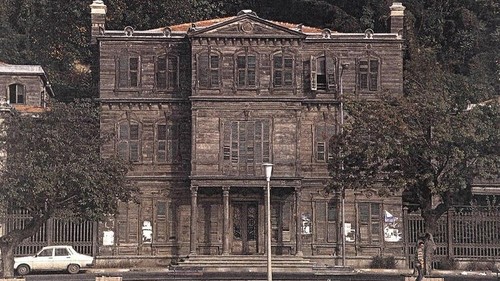
Ottoman-era mansion receives $200M investment from Qatari tycoon, to operate as luxury hotel
This picture shows the former state of the building.

Alfardan spent $200 million on the renovation and other investments. The hotel will open next year and will be operated by the U.S.-based the Six Senses Hotels Resorts & Spas chain.

Alfardan is a shareholder in the United Arab Bank and Commercial Bank of Qatar. He also serves as the deputy chairman of the Turkey-based Alternatif Bank, formerly Abank. In 2013, the Commercial Bank of Qatar acquired a 71 percent stake in Turkey’s Abank for $460 million. At the end of 2016, the bank paid another $224 million to acquire the remaining shares.

Fuat Kaplan, the architect of the project, said the hotel has 60 VIP rooms, three restaurants, one spa and two swimming pools and will operate with 400 employees.

The historic mansion was constructed by Sarkis Balyan, a prominent Ottoman-Armenian architect, upon the order of Ottoman Sultan Abdülhamid II.

The Kocataş Mansion was named after former Ottoman Prime Minister Necmeddin Molla Kocataş.

A 25-decare grove, famous for its spring water, lies behind the mansion.

Depicted as the pearls of the Bosporus, the waterfront mansions are essential elements of the unmatched landscape of the Bosporus. Both shores accommodate 600 mansions, and 366 are historical buildings.

Previously, 60 waterfront mansions were reported to be for sale, drawing huge interest from Qatari investors.

This article was originally published on dailysabah.com

The post Ottoman-era mansion receives $200M investment appeared first on VIP PROPERTY.

]]>
https://v.wsms.me/ottoman-era-mansion-receives-200m-investment-from-qatari-tycoon-to-operate-as-luxury-hotel/feed/ 0
Istanbul, Population and Demographic Structure https://v.wsms.me/istanbul-population-and-demographic-structure/ https://v.wsms.me/istanbul-population-and-demographic-structure/#respond Sat, 16 Jul 2016 10:25:03 +0000 https://vipproperty.com/?p=18962 Istanbul, Population and Demographic Structure

The post Istanbul, Population and Demographic Structure appeared first on VIP PROPERTY.

]]>
POPULATION AND DEMOGRAPHIC STRUCTURE
Istanbul had a population of 1,078,000 in 1945. Internal immigration towards Istanbul increased after the 1950’s due to its being the fastest growing industrial center. As such, the city’s the population reached 1,533,000 in 1955. Its population continued to increase annually at an average rate of 0.040-0.050 percent in the following periods where it reached 7,309,000 in 1990 and 9,199,000 in 1997. According to the population census as of 2000, Istanbul had a population of over 10 million people.As of 2007, according to official census data based on the “Address Based Population Registration System, which was conducted by Turkish State Institute of Statistics” internal migration to Istanbul still continues at a great speed. Moreover, the study shows that the population of Istanbul has increased as much as the city of Bursa in the last seven years and has reached 12,573,000 people.

The increase in population in last seven years has been 2.5 million. The most populated county among the thirty two is Büyükçekmece, with the population being 304,685. Only two counties, Eminönü and Şile, experienced a decrease in population.The most populous county in Istanbul is Gaziosmanpaşa, with 1,013,048 people. The following counties are Ümraniye, with 897,260 people; Küçükçekmece, with 785,392; Kadıköy, with 744,670. Eminönü, one of the most historical counties of Istanbul and whose population reaches over one million people during the day, has only 32.557 people residing in it. Currently, 8,156,696 people live on the European side, and 4,416,867 people live on the Asian side of Istanbul. The total female population of the city is 6,283,073, and the total male population is 6,291,763.

In the last fifty years, 11 million people have migrated to Istanbul and people from the 81 different provinces of Turkey currently live there. The city has a population of 12,573,836 residents according to the latest count as of 2007. Istanbul is a mosaic city where people have migrated from the various provinces of the country,  from Sivas to Trabzon and from Iğdır to Çanakkale. Of those people, only 2,167,572 people were registered to State Register of Istanbul. The reason that more people have registered their children to the State Register as Istanbulians is to solve problems of easily in terms of  registers of persons. Among the provinces of the country, the one which has the greatest flow of migration is the city of Sivas.  Approximately, 681,215 people living in the city are originally from Sivas. Following Sivas, is Kastamonu, with 516,556 people.  The number of people living in Istanbul from Sivas, Sinop, Bayburt, Ardahan, Erzincan, Giresun, and Kastamonua are greater than their original provinces from which they came.

According to the study comparing the number of people living in Istanbul with their home city, 638,464 people currently live in the city of Sivas, whereas the number of people from Sivas living in Istanbul is 681,214. The second province following Sivas is Kastamonu, with a total of  516,556 people living in Istanbul, Giresun with a total of 455,393, Ordu with a total of  453,197, and Tokat with a total of 396,840. Hakkari and Burdur are the two provinces with the least number of people living in Istanbul.

According to the county distribution  concerning the 32 counties of Istanbul, people from Sivas live mostly in Gaziosmanpaşa, which is the most crowded county of Istanbul. While the natives of Istanbul predominantly live in Kadıköy, those from Tokat predominantly live in Küçükçekmece, thos from Kastamonu live in both the Bayrampaşa and Fatih districts of the city. People from Sivas  make of the highest percentage of internal immigrants in Üsküdar, Bağcılar, Bahçelievler, Kâğıthane, Sarıyer, Şişli, and Beşiktaş.The people from Giresun is the first in Eyüp, Beykoz, Zeytinburnu and Beyoğlu. The people from Mardin has a large majority in Eminönü and Fatih, which is one of the most important financial districts of İstanbul. The people from Malatya live in Esenler, those from Trabzon live in Güngören, people from Erzincan live in Kartal, those from Rize live in Maltepe, people from Erzurum live in Sultanbeyli and Pendik, those from Samsun in Tuzla, people from Ordu in Ümraniye, people from Ardahan in Büyükçekmece, those from Gaziantep in Çatalca, people from Tokat in Silivri, and people from Kocaeli predominantly live in Şile.

POPULATION OF THE COUNTIES

1 Gaziosmanpaşa 1,013,000
2 Ümraniye  897,000
3 Küçükçekmece 785,000
4 Kadiköy  745,000
5 Bağcilar  719,000
6 Büyükçekmece 683,000
7 Üsküdar  583,000
8 Bahçelievler  572,000
9 Kartal  541,000
10 Pendik  520,000
11 Esenler  517,000
12 Fatih  423,000
13 Kağıthane  418,000
14 Maltepe  415,000
15 Eyüp  326,000
16 Avcılar  324,000
17 Güngören  319,000
18 Şişli  315,000
19 Zeytinburnu 283,000
20 Sarıyer  276,000
21 Sultanbeyli  273,000
22 Bayrampaşa 272,000
23 Beyoğlu  247,000
24 Beykoz  242,000
25 Bakırköy  215,000
26 Beşiktaş  192,000
27 Tuzla  165,000
28 Silivri  125,000
29 Çatalca  89,000
30 Eminönü  33,000
31 Şile   25,000
32 Adalar  10,000

Translated by Mr. Irfan KOKSAL

kaynak:http://www.ibb.gov.tr/SITES/KS/EN-US/0-EXPLORING-THE-CITY/LOCATION/Pages/PopulationandDemographicStructure.aspx

The post Istanbul, Population and Demographic Structure appeared first on VIP PROPERTY.

]]>
https://v.wsms.me/istanbul-population-and-demographic-structure/feed/ 0
Places to Visit in Istanbul https://v.wsms.me/places-to-visit-in-istanbul/ https://v.wsms.me/places-to-visit-in-istanbul/#respond Sat, 16 Jul 2016 10:18:08 +0000 https://vipproperty.com/?p=18935 Places to Visit in Istanbul

The post Places to Visit in Istanbul appeared first on VIP PROPERTY.

]]>


PLACES TO VISIT IN ISTANBUL

Dolmabahce Palace located in the Beşiktaş district of Istanbul, Turkey, on the European coastline of the Bosphorus strait, served as the main administrative center of the Ottoman Empire. It’s closed on Mondays and Thursdays and cameras are not allowed inside.

Topkapi Palace is a large palace in Istanbul, Turkey, that was the primary residence of the Ottoman sultans for approximately 400 years of their 624-year reign. Do visit the Harem, it’s worth every lira.

Grand Bazaar in Istanbul is one of the largest and oldest covered markets in the world, with 61 covered streets and over 3,000 shops which attract between 250,000 and 400,000 visitors daily. Never pay more than %50 of the asking price, try to get them down to 35-40% of the asking price.

Hagia Sofia is a former Greek Orthodox patriarchal basilica, later an imperial mosque, and now a museum in Istanbul, Turkey. It’s difficult to not face a long queue if you are trying to get inside, and it’s closed on Mondays.

Taxim Square situated in the European part of Istanbul, Turkey, is a major tourist and leisure district famed for its restaurants, shops, and hotels. It is considered the heart of modern Istanbul, with the central station of the Istanbul Metro network.

Yerebatan Cistern a subterranean roman aqueduct is the largest of several hundred ancient cisterns that lie beneath the city of Istanbul (formerly Constantinople), Turkey.

Anatolian Fortress (Anadoluhisarı) is a fortress located in Istanbul, Turkey on the Anatolian (Asian) side of the Bosporus, which also gives its name to the quarter around it.

Rumeli Fortress (Rumelihisarı) is situated at the narrowest point with 660 meters of the Bosphorus strait, just opposite of Anadoluhisarı (Anatolian Fortress) on the Anatolian side.

Kadikoy is a large, populous, and cosmopolitan district of Istanbul, Turkey on the northern shore of the Sea of Marmara, facing the historic city center on the European side of the Bosporus.

Ortakoy was a cosmopolitan area during the Ottoman era and the first decades of the Turkish Republic, with communities of Turks, Greeks, Armenians and Jews. Today the neighborhood still hosts many different religious (Muslim, Jewish, Orthodox, and other Christian) structures. It is also a popular spot for locals and tourists alike, with its art galleries, nightclubs, cafés, bars, and restaurants.

Prince islands are a chain of nine islands off the coast of Istanbul, Turkey, in the Sea of Marmara. During the summer months the Princes’ Islands are popular destinations for day trips from Istanbul. As there is no traffic on the Islands, the only transport being horse and cart, they are incredibly peaceful compared with the city of Istanbul.

Bosporus Tour cruise is probably the most overlooked Istanbul tourist attraction. Understandable, with such an abundance of historical sightseeing spots in Istanbul and too little time to squeeze them all into your short holiday.

kaynak:http://istanbul2010.org/places-to-visit/

Here is a collection of places you can buy bitcoin online right now.

The post Places to Visit in Istanbul appeared first on VIP PROPERTY.

]]>
https://v.wsms.me/places-to-visit-in-istanbul/feed/ 0