The post One house sold every 2.5 minutes in Turkey in 2017 appeared first on VIP PROPERTY.
]]>
The post One house sold every 2.5 minutes in Turkey in 2017 appeared first on VIP PROPERTY.
]]>The post The world’s best cities to invest in property appeared first on VIP PROPERTY.
]]>
The post The world’s best cities to invest in property appeared first on VIP PROPERTY.
]]>The post Turkey’s Golden Visa—Obtaining Citizenship appeared first on VIP PROPERTY.
]]>
A slew of terrorist attacks plotted by the so-called Islamic State (ISIS), a failed coup attempt on July 15, poor performance of the Turkish lira against the U.S. dollar—it is hard to claim that 2016 was a good year for Turkey. Despite of the chain of unfortunate events of last year, the stability that Turkey has gained in the last 15 to 16 years has not been dramatically affected. Yes, we’ve struggled… The fear of going into a dark tunnel with no light at the end has increased as well as criticism that Turkey is now facing a dictatorship, but last year’s general election and the referendum of April 2017 have proven that the Turkish people want stability and have no intention of giving up on the gains of the last two decades.
The gains I’m referring to are multi-dimensional, not just economic (like the GDP’s stable increase) or social, and they’re helping to shape a new national identity and new lifestyle, as well.
Real Estate—The Sector Driving Turkey’s Growth
According to official figures, the manufacturing industry contributed 16.7% of GDP in 2015, down from 17.1% in 2003, the Justice and Development Party’s (AKP) first full year in power. The construction and real estate sectors, meanwhile, accounted for about 15.8% of GDP in 2015, up from 12.5% in 2003. Investment spending on construction is lifting values in almost every
sector, particularly in household durables and related services, as well as increasing activity in various service sectors such as real estate, finance, and transportation. Direct and indirect construction-related spending has reasonably accounted for about 40% of real economic growth from 2010 to 2016.
Urban renewal and megaprojects dominate the agenda for the foreseeable future, particularly in Istanbul. Some mega projects in this megacity include the Marmaray rail project, the Istanbul Canal, the third Bosphorus Bridge, and Istanbul’s third international airport, projected to be the largest airport in the world.
Adding to the urban renewal and megaprojects, growing population, increased income per capita, and ease of buying property are driving rapid growth of Turkey’s real estate sector. Real estate is playing a dominant role in the national economy and Turkey’s position in the international arena. Through 2015 to the beginning of 2016, the property market in Turkey, particularly in Istanbul, was doing explicitly well, as evidenced in articles published in The Telegraph and Global Property Guide, just to name a few. On the other hand, after the first quarter of 2016, and especially after
the failed coup attempt in July 2016, the market slowed down for international buyers. Despite the drop in foreign buyers, the number of sales in Turkey increased compared to 2015. In fact, the local market has not slowed down…
Number of House Sales (2015–2016)

Source: Turkish Statistics Institute (TUIK)—
Published on Jan. 24, 2017
Domestic buyers have been crucial to Istanbul’s rise. More than their Western European counterparts, Turkish investors have a preference for property over more liquid assets such as equities. Falling interest rates have helped make new home loans affordable. Real estate’s share in total bank loans is quite large and continues to increase. The Banks Association of Turkey says the share of real estate loans issued through financial institutions was 37.7%. A sharp fall in real estate business could push the Turkish economy into trouble.
Courting FDI
One of the key recommendations from the Organisation for Economic Co-operation and Development (OECD) published in July 2016 was for Turkey to “reduce barriers to foreign direct investment.” This helps explain why the Turkish government has decided to attract overseas property investors by loosening regulation on visa applications, as well as easing the path to citizenship.
On Jan. 12, 2017, a new regulation was published in the country’s Official Gazette (T.C. Resmi Gazete) stating that if a foreigner buys a property valued at US$1 million or higher, then the owner will be eligible for citizenship.
Applicants who meet two conditions, listed below, are eligible to apply for Turkish citizenship straightaway…
• The owner cannot sell the property for three years. In other words, the applicant/owner cannot transfer the Title Deeds (TAPU) to another person.
• The value of the property/properties must be assessed by the Ministry of Environment and Urbanization (Çevre ve Şehircilik Bakanlığı).
Applications to obtain citizenship can be done directly with the Governorships in the major cities or with the local District Governorships in the districts/counties. Applications can be done through some private agents/firms and also through a solicitor, the latter being highly recommended. The application process should take four or five months, from submitting the application
to getting the result. A criminal background check is required. This program is a unique opportunity, particularly for Middle Eastern middle-class families concerned about the uncertainty in the region. Istanbul, for example, is an ideal destination for them, as they can freely practice their religion while enjoying a Western lifestyle with their families and securing their children’s future. In Turkey, they can send their children to top-class schools and universities and access first-rate health care. Being a citizen of Turkey opens new doors for business, too, as Istanbul is turning into a crucial finance center and gateway between two worlds. Turkish citizenship means having room to maneuver both, and to reap the rewards accordingly.
Evren Erem was born in Istanbul, Turkey, in 1961, and holds a BA and MA in classics from Istanbul University. He moved to the U.K. in 1996, obtaining a Ph.D. in linguistics at Manchester University. He has worked as a research assistant at Istanbul University until 1996. Since 2001, he has been in the private sector (mainly in real estate and property management), and is now with Universal21 & VIP Property, where he’s been since 2013.
Source: Simon Letter July 2017
The post Turkey’s Golden Visa—Obtaining Citizenship appeared first on VIP PROPERTY.
]]>The post VIP PROPERTY AT CITYSCAPE – DUBAI appeared first on VIP PROPERTY.
]]>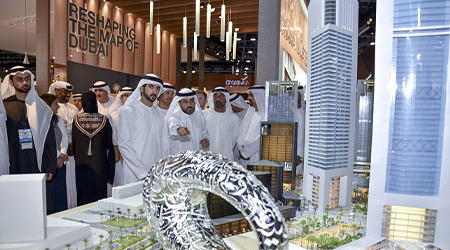
We are pleased to inform you that we have attended the Cityscape in Dubai between 11th of September and 13th of September 2017 with the developers for one of our recent projects called 211 Park & Plus. Overall, it was a very successful event, which is recognized as the annual barometer for the real estate industry in emerging markets and is one of the largest and most influential real estate events held globally, for us in terms of networking and expanding our business.
For the three-day event, 300 exhibitors from both local and international markets have arrived at Dubai World Trade Centre. One of the facts that made the event successful and exciting was the restrictions on direct sales has been lifted. As noted by James Morgan “there are many reasons for developers and real estate service providers to attend an exhibition like Cityscape, not least to showcase their latest wares. Indeed, the event saw a diverse array of high-profile participants, many of which unveiled their upcoming developments. Aldar Properties, Azizi Developments, Deyaar Development, Jumeirah Golf Estates (JGE), National Bonds Corporation, and Union Properties (UP) all launched projects at the show” (Source: http://www.constructionweekonline.com/article-46346-cityscape-global-2017-highlights-need-for-more-nuanced-sales-strategies/) According to Khaleej Times (14.09.2017), boosted by a year-on-year increase by 25% in visitor traffic during its first two days, Dubai Land Department (DLD) transactions registered a 186% increase while most big-ticket developers recorded overwhelmingly positive sentiment driven by onsite sales. Cityscape Global data partner Property Monitor have confirmed that the number of transactions for off-plan properties on the first day of Cityscape had grown to almost three times the size, jumping from 37 to 106, year-on-year. There is no doubt that the key appealing point was the attractive payment plans. It was also published some figures on Khaleej Times (12.09.2017): total value of projects in UAE as September 2017: $227.9 billion; value of buildings being developed in Dubai: $121.1 billion; number of building projects under way in UAE: 7,878; value of projects under way in Abu Dhabi: $64.3 billion.

Apart from some big launches from the biggest players in the regional real estate development, there were some new exhibitors this year including such as Arada (Sharjah), Aldar (Abu Dhabi), Imkan (Abu Dhabi), Oriental Pearls (Dubai), and Northacre from the UK. There were also some new developers at the Bahrain and Pakistan pavilions, which was quite weak in our opinion, whilst some 20 firms from South Korea have exhibited with Korean Tourism Organization, which was quite interesting. Cityscape have also given the opportunity to the visitors not only to meet with the developers, but also the brokers and financiers and some marketing companies (in a broad sense). Cityscape talks on each day have covered various interesting topics.
We have noticed that there is quite huge interest in off-plan projects with flexible payment plans. On the first day of Cityscape Global this year, a total of 107 off-plan units were transferred, whereas on the first day of Cityscape Global in 2016, only 36 off-plan units sold. Lynnette Abad, head of Property Monitor at Cavendish Maxwell, commented: “Due to the winning combination of low price point and attractive payment plan, developers have managed to lure the investor back into the market and have opened up the doors to first time buyers who couldn’t avoid to buy property before.” Individual investors have also made up a large proportion of attendees at this year’s Cityscape. (Source: http://www.cbnme.com/news/highlights-cityscape-global-2017/ )
We are proud of taking a part in this global event, which gave us a chance and opportunity to make some agreements with some big companies and to meet the international investors.
The post VIP PROPERTY AT CITYSCAPE – DUBAI appeared first on VIP PROPERTY.
]]>The post We Have Just Launched Property Sales By Bitcoin appeared first on VIP PROPERTY.
]]>
Adil Yaman, CEO for VIP PROPERTY, has made some new warnings on reduction of Arab capital in the property sector in the recent weeks. He has emphasized that the Government’s implementations of the new regulations, which are regulating the real estate organisations and their commissions, will build up the confidence in the overseas investors/buyers by reducing particularly the overseas buyers’ complaints that ‘they have been deceived and the estate agents have applied higher commissions’ and he has confirmed that they will start selling the big projects they have been marketing by bitcoin.
Adil Yaman, CEO for VIP Property, has also confirmed that this has been tried by same companies in the past, but it was not successful as these companies did not have strong network; he has explained that they will issue the invoices in Turkish Lira (TL) corresponding bitcoin, and that in 3 months they are expecting a $50 million turnover from the sales of the first phase projects through the agents’ network in over 30 countries and an effective advertisement campaign. He has stated that there will be no restrictions on the money transfers due to the fact that bitcoin is universally accepted as an exchange currency and this will make things easier for the investors who want to invest in Turkey, but struggling to take the money out of their country.
Adil Yaman has finalized his words by stating that they, as an innovative company in the sector and as a company that have been always focusing on establishing the global service level and quality in Turkey, will continuously keep working hard.
The post We Have Just Launched Property Sales By Bitcoin appeared first on VIP PROPERTY.
]]>The post House sales in Turkey rise 5.1 percent in 2017 appeared first on VIP PROPERTY.
]]>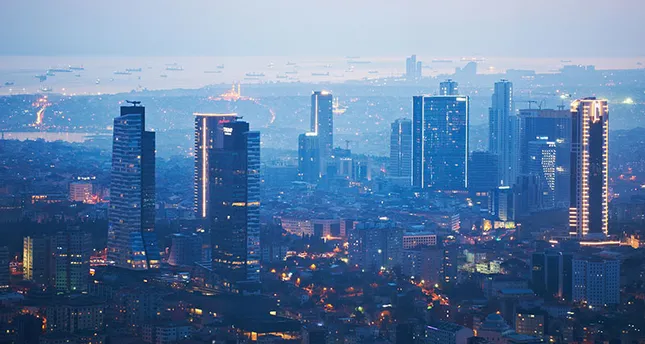
The number of property sales in Turkey rose 5.1 percent in 2017 compared to the previous year, the country’s statistical authority TurkStat said on Friday.
House sales in 2017 exceeded the record from 2016, as more than 1.409 million residential properties were sold last year, while the figure was 1.341 million units in 2016.
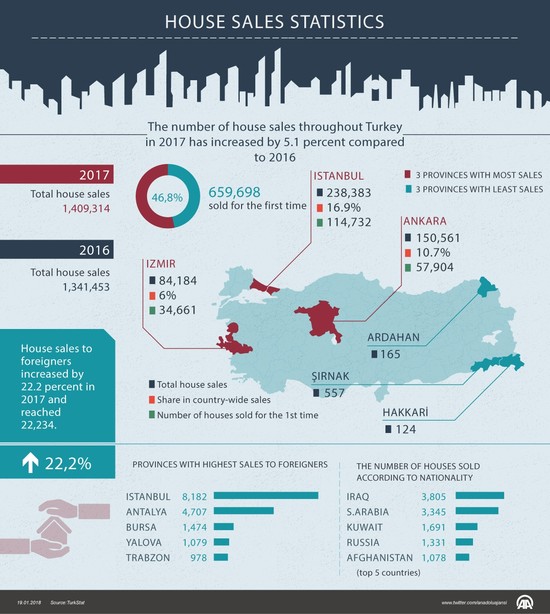
Last year, Istanbul – Turkey’s largest city by population and one of its top tourist draws – had the largest share of house sales with 16.9 percent, or 238,383 houses.
TurkStat said Ankara and the Aegean province of Izmir racked up 150,561 (10.7 percent) and 84,184 (6 percent) of total housing sales, respectively.
However, house sales decreased by 6.8 percent in December 2017, compared to the same month of the previous year, and stood at 132,972 units.
For house sales in December 2017, Istanbul had the highest share with 17.2 percent and 22,932 properties sold.
It was followed by Ankara with 12,868 and Izmir: 8,305, of 9.7 percent and 6.2 percent, respectively.
“In Turkey, 473,099 of all sales were mortgaged sales and 936,215 were other house sales,” the institute said.
Some 838,000 houses or 59.4 percent were bought by men, and about 409,500 houses or 29.1 percent were bought by women, TurkStat said, while over 29,000 houses or 2.1 percent were bought jointly by women and men.
House sales to foreigners up 22.2 percent
Official data showed that property sales to foreigners in Turkey rose 22.2 percent year on year in 2017.
“In house sales to foreigners, Istanbul was the number one province with 8,182 sales in 2017,” TurkStat said.
The Mediterranean resort city of Antalya was number two, with 4,707 sales to foreigners, followed by Bursa with 1,474 and Yalova with 1,079.
TurkStat data said the largest number of house sales by nationality went to Iraqis, who bought 3,805 houses in 2017, followed by Saudis with 3,345, Kuwaitis with 1,691, Russians with 1,331 and Afghans with 1,078.
In December 2017, 2,164 houses were sold to foreigners, with Istanbul leading the way with 802, followed by Antalya with 378, Bursa with 188 and Yalova with 141.
In December, Iraqi citizens bought 418 houses in Turkey, followed by Saudis with 271, Kuwaitis with 151 and Russia 129.
TurkStat will release its next property sales report on Feb. 21.
Kaynak: Daily Sabah
The post House sales in Turkey rise 5.1 percent in 2017 appeared first on VIP PROPERTY.
]]>The post House Sales Statistics, December 2017 appeared first on VIP PROPERTY.
]]>In Turkey, 1 409 314 houses were sold in 2017
In Turkey, house sales increased by 5.1% in 2017 compared to the previous year. For the house sales of 2017, İstanbul had the highest share of house sales with 16.9% and 238 383 sold house. The followers of Istanbul were Ankara with 150 561 house sales with 10.7% and İzmir 84 184 house sales with 6%. The least house sold province is Hakkari with 124 house sales. In Turkey, 473 099 of all sales were mortgaged sales and 936 215 are other house sales.
Number of house sales, 2016-2017

In December 2017, 132 972 houses were sold in Turkey
In Turkey, house sales decreased by 6.8% in December 2017 compared to the same month of the previous year and hence, became 132 972. For the house sales of December 2017, İstanbul had the highest share of house sales with 17.2% and 22 932 sold house. The followers of İstanbul were Ankara with 12 868 house sales and İzmir 8 305 house sales with the share of 9.7% and 6.2% respectively. The least house sold provinces were Hakkari and Ardahan with 11 house sales, Bayburt with 52 house sales.
In December 2017, 34 029 ownership of the houses changed by mortgage sales
The mortgaged house sales throughout Turkey became 34 029 by decreasing 30.7% compared to the same month of the previous year. House sales with mortgage had a 25.6% share of all house sales in Turkey. Most of house sales with mortgage was in İstanbul with 6 516 sales. İstanbul was the first province in Turkey ranking that has most house sales with mortgage share with 19.1%. Mortgaged house sales had the highest share in Ardahan with 45.5% of all house sales.
Ownership of 98 943 houses changed by other sales
Other house sales in Turkey became 98 943 by increasing 5.7% compared to the same month of the previous year. In the other sales, İstanbul was the first province with 16 416 sales and 16.6% share. Other house sales had 71.6% share of all house sales in İstanbul. Ankara was the second province with 9 101 sales. Ankara was followed by İzmir with 6 061 sales. The least other house sales was realized in Ardahan with 6 house sales.
House sales by type of sales, December 2017 House sales by state of sales, December 2017


In house sales, 66 661 of houses were sold for the first time
First house sales in Turkey became 66 661 by decreasing 7.1% compared to the same month of the previous year. First house sales had 50.1% share of all house sales in Turkey. The most first house sales was in İstanbul with 11 512 sales. İstanbul was the first province in Turkey ranking that had most first house sales share with 17.3%. The followers of İstanbul were Ankara with 5 119 house sales and İzmir with 3 885 house sales.
Ownership of 66 311 houses changed by second hand sales
Second hand house sales in Turkey became 66 311 by decreasing 6.5% compared to the same month of the previous year. In the second hand sales, İstanbul was the first province again with 11_420 sales and 17.2% share. Share of the second hand sales was 49.8% in İstanbul in total house sales. Ankara was the second province with 7 749 sales and Ankara was followed by İzmir with 4_420 sales.
In Turkey, 22 234 houses were sold to foreigners in 2017
House sales to foreigners increased by 22.2% in 2017 compared to the previous year. In house sales to foreigners, İstanbul was the first province with 8 182 sales in 2017. Antalya was the second province with 4 707 sales. Antalya was followed by Bursa with 1 474 sales and Yalova with 1 079 sales.
In December 2017, 2 164 houses were sold to foreigners. İstanbul was the first province with 802 sales in December 2017. The followers of İstanbul were Antalya with 378 house sales, Bursa with 188 house sales and Yalova with 141 house sales.
Most house sales were made to Iraqi citizens according to country nationalities
Iraqi citizens bought 3 805 houses from Turkey in 2017. The followers of Iraq were Saudi Arabia with 3 345 house sales, Kuwait with 1 691 house sales, Russia with 1 331 house sales and Afghanistan with 1 078 house sales.
In December, Iraqi citizens bought 418 houses from Turkey. The followers of Iraq were Saudi Arabia with 271 house sales, Kuwait with 151 house sales, Russia with 129 house sales.
In Turkey, 837 928 men and 409 453 women became the owner of house in 2017
While 837 928 houses with share 59.4% were bought by men and 409 453 houses with share 29.1% were bought by women, 29 178 houses with share 2.1% were bought jointly by women and men in general of Turkey. İstanbul ranked the first in terms of the number of houses purchased by women with 64 147 and 15.7% share in Turkey. While men bought 137 067 houses in İstanbul, 7 162 houses were bought by men and women jointly. The lowest number of houses sold to women was in Ardahan with 29 sales while Hakkari had the lowest number of houses sold to men with 89 sales.
Kaynak: Turkstat
The post House Sales Statistics, December 2017 appeared first on VIP PROPERTY.
]]>The post ‘CHOICE ARCHITECTURE’ AND VIP PROPERTY appeared first on VIP PROPERTY.
]]>
The post ‘CHOICE ARCHITECTURE’ AND VIP PROPERTY appeared first on VIP PROPERTY.
]]>The post BAN ON FOREIGN BUYERS IN NEW ZEALAND TO EASE appeared first on VIP PROPERTY.
]]>
Recently I have come across an article at The Guardian (26.10.2017) regarding the planned ban on the foreign buyers to tackle an on-going housing crisis in the country. New Zealand’s quite young Prime Minister Jacinda Ardern has apparently showed her determination to stop the property speculators. In the recent years, New Zealand has become a favourite destination for the Chinese, Australian and Asian buyers as well as the world’s wealthy elite such as Peter Thiel (the co-founder of PayPal and a Facebook board member – he is also a Trump donor), Jack Ma (the man behind Alibaba). According to the article, there is a recorded boom in foreign buyers of land with an almost sixfold increase to 465,863 hectares in 2016 compared to the year before (this is equivalent to 3.2% of farmland in a country of 4.7 million population). This is the point the problems raise: affordability. A report by the Economist earlier this year showed that New Zealand had the most unaffordable house prices in the world with the prices in Auckland climbing 75% in the past four years (the market has recently slowed down though). The cost of owning a home increased by 10.4% in the year to the end of June, compared to a 2.8% increase in the UK. Prices in Wellington, the capital, soared more than 18% in the year to June. On 31st of October, another article has been published in the same line with the list of the world’s least affordable housing markets (Source: https://www.bloomberg.com/news/articles/2017-10-31/new-zealand-to-slap-home-buying-ban-on-foreigners-to-ease-market).
The case of New Zealand needs to be examined carefully to understand the actual motives behind the capital appreciation. Is it speculative or is it (f)actual? This case proves that lack of local demand, which is an essential factor for an actual appreciation, will create a ground for a speculative appreciation. In the light of this case if we look into the situation in Istanbul/Turkey market, we will have an opposite case. Housing Index in Turkey increased to 246.10 Index points in September from 244.50 Index points in August of 2017. Housing Index in Turkey averaged 169.19 Index points from 2002 until 2017.

Now let me give the latest statistics published from the Turkish Statistical Institute: In Turkey, house sales increased by 28.8% in September 2017 compared to the same month of the previous year and hence, became 140,298. For the house sales of September 2017, İstanbul had the highest share of house sales with 16.7% and 23,471 sold house. The followers of İstanbul were Ankara with 13,945 house sales and 9.9% and İzmir 7,575 house sales and 5.4%.

Source: http://www.turkstat.gov.tr/PreHaberBultenleri.do?id=24801
Here is the point: In house sales to foreigners became 2,236 by increasing 75.2% compared to the same month of the previous year. İstanbul was the first province with 797 sales in September 2017. This means out of 23,741 sold house only 797 have been bought by the foreign buyers and most importantly the prices have been dominated by the local drive and demand. I believe that this is the concrete and solid ground for the continuous capital appreciation.
Evren Erem, VIP Property
The post BAN ON FOREIGN BUYERS IN NEW ZEALAND TO EASE appeared first on VIP PROPERTY.
]]>The post Residential Co-Living Trend Accelerates in Asia appeared first on VIP PROPERTY.
]]>The post Residential Co-Living Trend Accelerates in Asia appeared first on VIP PROPERTY.
]]>